
“Chesterburgh’s Lost Pump: When Progress Erases History”
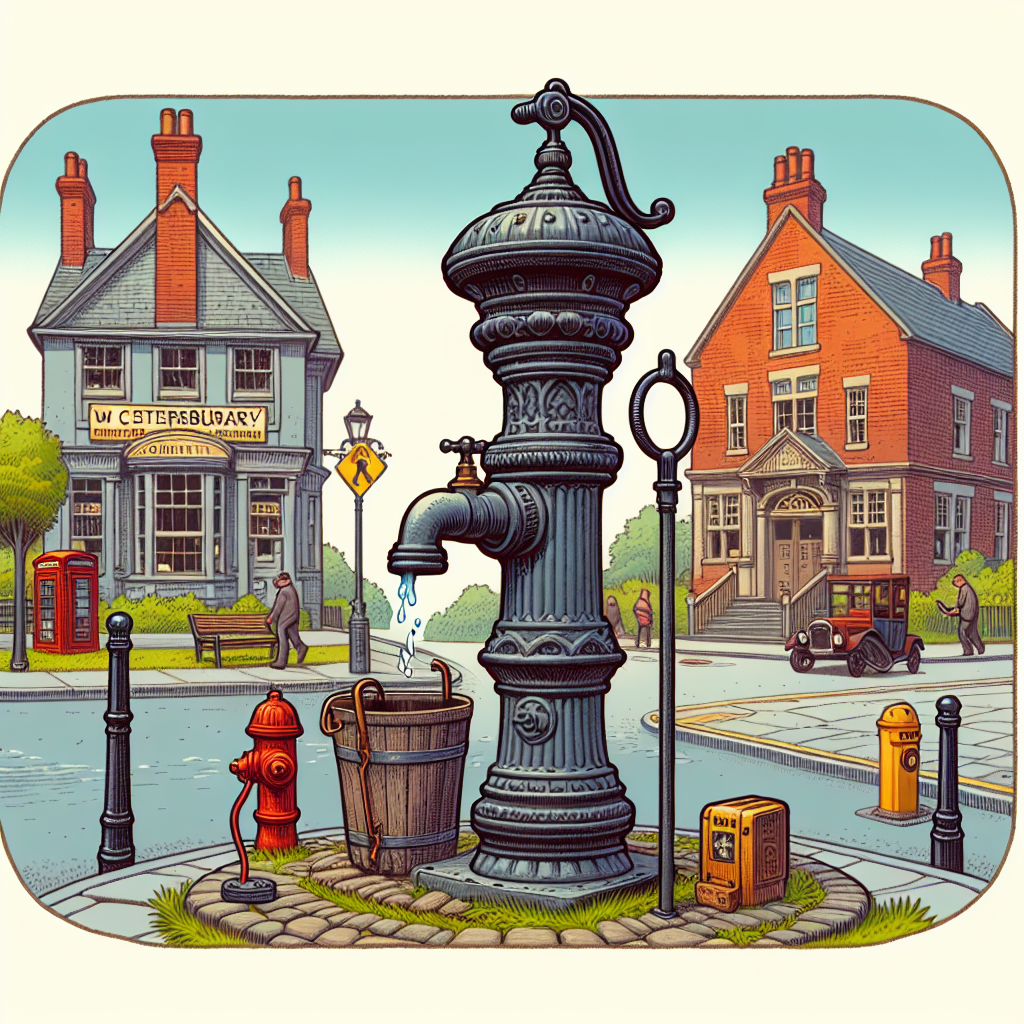
Chesterburgh’s oldest working water pump, tucked behind Main Street’s faded red brick library, was quietly disconnected last Thursday. The town council approved the move in a vote that passed largely under the radar, replacing the century-old structure with a modern, GPS-tracked hydrant system. What seemed like an ordinary infrastructure upgrade has stirred more questions than answers among locals and historians alike.
The water pump, installed in 1912, has been a fixture of the town square’s southern corner. Many remember it as more than just a piece of obsolete machinery; it was the informal meeting point for neighbors swapping news, the quiet backdrop to childhood games, and the last visible trace of the town’s initial boom years. To lose it was to erase a tangible thread connecting today’s Chesterburgh with its past.
At the last town hall meeting, council members cited safety concerns, efficiency, and compliance with updated municipal ordinances as their reasons. “The pump no longer meets our water safety standards,” said Councilman Raj Patel, who voted in favor of the replacement. “We’re talking about clean water delivery here. The new system is more reliable and easier to monitor.”
Yet, the decision was not unanimous. Councilwoman Lena Morales cast the lone dissenting vote. “This pump isn’t just old iron and rust. It’s part of Chesterburgh’s story,” Morales argued. “Ripping it out without a preservation plan feels like an oversight. Nothing about this process included public input or consideration for our collective memory.”
Many longtime residents share her sentiment. Douglas Finch, 78, grew up within a block of the pump and recalls fetching water there when the city’s mains briefly failed during the blackout of ’73. “It was a lifeline back then,” he said. “My grandmother used to say the pump had the thirst of a hundred old souls. It wasn’t just water; it was history flowing through those pipes.”
The pump’s design carries the classic industrial aesthetics of the early 20th century—cast iron, ornate curves, and a handle worn smooth by decades of hands. Historical society members have noted its potential eligibility for heritage status, a process that seems to have been sidelined during the council’s swift vote. No formal preservation assessment was made public, and no consultation with the Chesterburgh Historical Society was recorded.
Questions remain about the missing link between the council’s decision and the preservation community. I reached out to the society’s chair, Miriam Duvall, who responded, “It feels like the pump was seen as an obstacle rather than an artifact. We’ve asked for documentation on the assessment that led to this removal but have yet to receive anything detailed.”
Local businesses near the pump echoed a mixture of resignations and quiet complaints. Gloria Chen, owner of Café Latté, adjacent to the town square, observed, “Tourists ask about that pump sometimes. It’s something unique about our square. Now it’s gone, and no one’s explained why it needed to go, or what replaces the character it brought here.”
In its place, the new hydrant stands bright red and unassuming, outfitted with sensors and connected to a central system monitored by the town’s utilities department. Officials boast its efficiency and data reporting. Yet for many, it lacks the human scale and storytelling power of the old pump.
There’s an emerging divide in Chesterburgh over what counts as progress. Modernizing infrastructure is essential; no one disputes that. But the way it’s done—quietly, with little public conversation—has left a residue of mistrust.
Town Manager Elise Garner said, “Our priority is public safety and service quality. We must keep up, and sometimes that means phasing out old equipment. We appreciate concerns about history, but we also have to consider costs and functionality.” She pointed to the town’s limited budget and t